
PULLING OUT A GOLF SPONSOR MIGHT BE THE WORST CLUB IN THE BAG
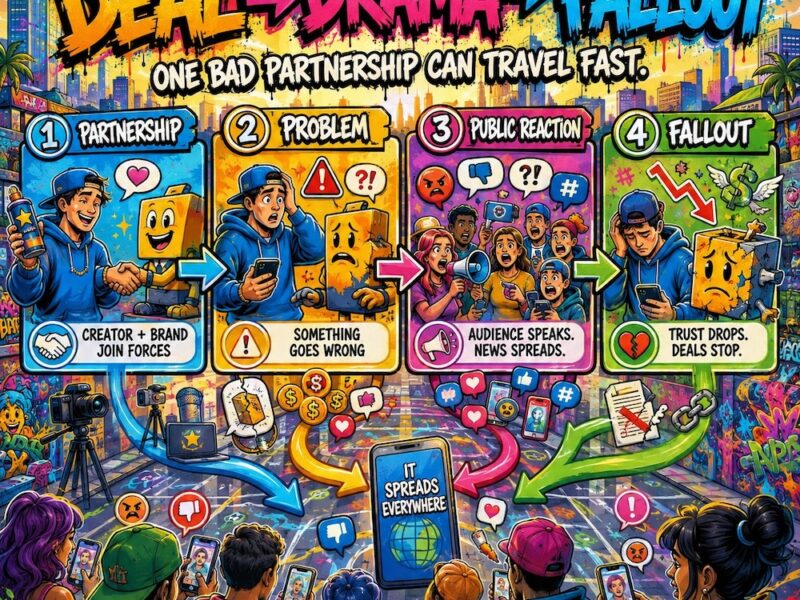
HOW FAST CAN YOU BLOW UP A SPONSORSHIP? APPARENTLY, EXTREMELY FAST.
Good Good Golf, Callaway, One Bad Video—and What Happens When Sponsorship Value Turns Negative
A SponsorsFreak.com Commentary Parking Spot
Sponsors can be fantastic.
Creators want sponsors.
Athletes want sponsors.
Events want sponsors.
Podcasters want sponsors.
Race teams want sponsors.
Everybody talks about what a sponsor can do FOR YOU.
- Money.
- Exposure.
- Products.
- Credibility.
- Access.
But what happens when YOU become a liability to the sponsor?
Apparently, things can unravel really fast.
GOOD GOOD GOLF HAD THE KIND OF SPONSORSHIP MOST CREATORS DREAM ABOUT
Good Good Golf isn’t some guy filming golf swings in his backyard with 312 subscribers.
It became one of the biggest creator brands in golf.
- More than 2 million YouTube subscribers.
- A major relationship with Callaway Golf.
- Co-branded golf equipment.
- Merchandise in major retailers.
- Television exposure.
- And title sponsorship of a PGA Tour event.
That’s not somebody hoping to get a free box of golf balls and a couple golf shirts.
That’s a sponsorship dream for most content creators.
Then came one promotional video.
THE VIDEO WAS SUPPOSED TO SELL A DRIVER
The video promoted a co-branded Callaway Quantum Good Good driver.
In the clip, Good Good co-founder Garrett Clark runs toward Good Good employee Alexis Miestowski as she reaches for the golf club.
He pushes her to the ground.
Then, while she’s down, he tells her not to touch his new driver.
Good Good later said the concept was intended as a parody inspired by a movie.
That apparently didn’t help much.
The backlash was immediate.
- The video disappeared.
- Apologies followed.
- Then business relationships started disappearing too.
THIS IS WHERE SPONSORS FREAK GETS INTERESTING
I don’t really care about spending 3,000 words debating whether you personally thought the video was offensive.
That’s not the most interesting story here.
And one thing I actually like about Sponsors Freak is that you can’t leave a comment underneath this Parking Spot.
Why?
Because this isn’t social media.
If you’ve got something to say, you’re welcome to spend $7 and create your own Parking Spot.
Write your own argument.
Build your own page.
Make your own case.
You’re not going to hijack my opinion and commentary with 700 comments underneath it.
That’s what social media is for.
Have at it over there.
Link to this page and tell everybody I’m an idiot if you want.
I might even click it. 😂
But the interesting Sponsors Freak story isn’t whether somebody on X was offended.
It’s what happened to the MONEY and the RELATIONSHIPS.
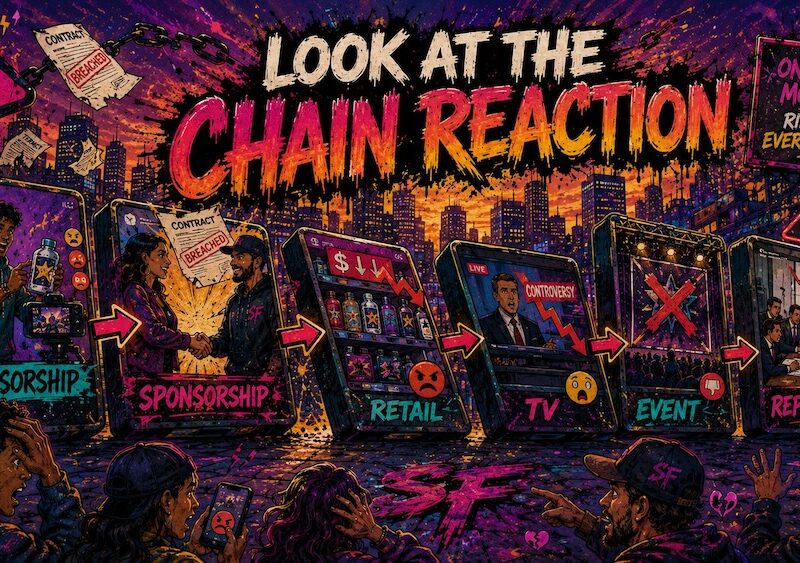
LOOK AT THE CHAIN REACTION
- Callaway ended its partnership with Good Good.
- Callaway announced a $1 million commitment to organizations working to prevent violence against women.
- Good Good stepped away from title sponsorship of its upcoming PGA Tour event in Austin.
- The tournament lost the Good Good name.
- Golf Channel canceled the related season of Big Break.
- Golf-industry reports said Good Good merchandise was pulled from Dick’s Sporting Goods and Golf Galaxy stores and websites.
One marketing video didn’t just create ugly comments on social media.
It reached into:
- Sponsorship.
- Retail.
- Television.
- A PGA Tour event.
- A major equipment partnership.
And probably a whole bunch of conversations inside conference rooms that none of us will ever hear.
AND HERE’S THE PART THAT REALLY INTERESTS ME
Callaway approved the video.
That’s important.
Callaway CEO Chip Brewer acknowledged that Good Good produced the video, but Callaway approved it before publication.
So this isn’t as simple as:
“The dumb creator made a dumb video and the innocent sponsor had nothing to do with it.”
No.
The sponsor was part of the approval process.
Then the backlash arrived.
And suddenly a campaign both sides participated in became a problem for both sides.
That raises some fascinating sponsorship questions.
WHO OWNS THE RISK?
If you’re paying somebody to represent your company, you’re buying more than views.
You’re connecting your reputation to theirs.
That relationship can create:
- Positive attention.
- Credibility.
- Sales.
- Audience access.
- Brand recognition.
But the exact same connection can also create:
- Negative attention.
- Boycotts.
- Customer anger.
- Retail problems.
- Public-relations expenses.
- Contract disputes.
- Pressure from other business partners.
A sponsorship is a connection.
That’s fantastic when everybody loves the connection.
It gets considerably more complicated when they don’t.
THE CREATOR ISN’T JUST RENTING OUT 60 SECONDS
This is something I think a lot of smaller creators misunderstand when they dream about landing sponsors.
They think:
“I’ll mention your company for sixty seconds. You give me money. Everybody goes home happy.”
Maybe.
But a serious sponsor may also be asking:
- Who are you?
- What does your audience think of you?
- What else do you post?
- What could you post tomorrow?
- What controversies are attached to you?
- How do you respond when something goes wrong?
- Could your reputation damage ours?
The sponsor isn’t merely purchasing your audience.
To some degree, the sponsor is purchasing an association with YOU.
That’s why the relationship can be incredibly valuable.
And incredibly risky.
THE SPONSOR CAN BECOME THE LIABILITY TOO
It works in the other direction.
A creator isn’t necessarily safe just because the sponsor is a giant corporation.
What happens if:
- The sponsor gets caught in a scandal?
- The company gets sued?
- The product fails?
- The CEO says something insane?
- The company becomes politically radioactive?
- A campaign both sides approved suddenly becomes toxic?
That’s why this Good Good story is a really good story.
It’s much more interesting than simply screaming about one video.
Both sides brought their reputations into the deal.
That’s sponsorship.
I THINK TAKING DOWN THE VIDEO WAS A MISTAKE
Now we get to my opinion.
And again, this is my Garage here on Sponsors Freak.
So I’m allowed to have one.
I would have left the video up.
Are you kidding me?
YouTube isn’t exactly a platform famous for avoiding controversial, stupid or offensive videos.
Controversy produces:
- Clicks.
- Comments.
- Shares.
- Reaction videos.
- News stories.
- Searches.
- More clicks.
Good Good already had a massive audience.
Then virtually the entire golf world started talking about this video.
So my sales brain immediately asks:
WHAT IF THEY HAD LEFT THE VIDEO UP?
LET’S DO SOME COMPLETELY HYPOTHETICAL YOUTUBE MATH
I don’t have access to Good Good’s YouTube analytics.
Neither do most of the people talking about this.
So I’m not going to pretend I know exactly what their channel earns.
And technically, if we’re talking about what the creator actually receives from YouTube advertising, RPM is the more useful number than CPM.
CPM is roughly what advertisers pay per thousand advertising impressions.
RPM is closer to the revenue the creator actually receives per thousand video views after YouTube’s share and other factors.
So let’s just play with round hypothetical numbers.
What if the controversy had driven the original video to 20 million views?
| Hypothetical Creator RPM | 20 Million Views |
|---|---|
| $5 RPM | $100,000 |
| $10 RPM | $200,000 |
| $15 RPM | $300,000 |
| $20 RPM | $400,000 |
Again:
Those are examples.
Not Good Good’s actual numbers.
But I can already hear somebody saying:
“Yeah, genius. That’s not a million dollars.”
Correct.
THAT’S ONE VIDEO.
SO MAKE ANOTHER ONE
This is where I think they could have had some fun with the whole thing.
I would have created another video almost immediately.
Same basic setup.
Except this time the woman grabs the driver.
The guy reaches for it.
She knocks HIM down.
Then she looks at him and says:
“DON’T TOUCH MY DRIVER.”
There you go.
Part Two.
You flipped the joke.
You acknowledged the controversy.
You gave everybody another video to argue about.
And maybe—just maybe—you communicated something else:
“My sponsor kicked me to the curb? Okay. I’m still here.”
That’s a very different narrative.
WHAT IF THE SECOND VIDEO GOT ANOTHER 20 MILLION VIEWS?
Now our completely hypothetical view total becomes 40 million.
Using those exact same example RPMs:
| Hypothetical Creator RPM | 40 Million Views |
|---|---|
| $5 RPM | $200,000 |
| $10 RPM | $400,000 |
| $15 RPM | $600,000 |
| $20 RPM | $800,000 |
Still hypothetical.
Still not necessarily a million dollars.
But now we’re talking about TWO videos.
And YouTube revenue isn’t even the entire question.
HOW MANY NEW SUBSCRIBERS DOES 40 MILLION VIEWS CREATE?
I have no idea.
Neither does anybody else until it happens.
But that’s the point.
What could all of that attention potentially create?
- New subscribers.
- New viewers discovering the channel.
- People watching older videos.
- More merchandise sales.
- More email subscribers.
- More social followers.
- More future video views.
- More conversations about Good Good.
A YouTube subscriber isn’t worth money only on the day they subscribe.
They might watch:
- The next video.
- The video after that.
- Twenty old videos.
- Fifty future videos.
That’s the part simple RPM math doesn’t capture.
AND WHAT ABOUT THE NEXT SPONSOR?
This is where it gets even more interesting.
Everybody automatically assumes controversy makes a creator toxic to every sponsor.
Maybe.
But does it?
Every brand isn’t Callaway.
Every company doesn’t have the same:
- Audience.
- Risk tolerance.
- Personality.
- Marketing strategy.
- Corporate culture.
What if another company looked at the entire mess and thought:
“Twenty million people are watching this guy?”
Or:
“He just doubled down, made fun of the controversy and another 20 million people watched THAT?”
How many new sponsors might call?
Zero?
Maybe.
One?
Maybe.
Five?
Who knows?
That’s the fascinating part.
You don’t know until you choose the path.
THERE IS A MARKET FOR SWAGGER TOO
Corporate America tends to love safe.
But audiences don’t always love safe.
Some brands don’t either.
There are companies whose entire marketing personality is built around:
- Irreverence.
- Comedy.
- Risk.
- Controversy.
- Not sounding like everybody else.
So imagine Good Good had responded with:
“Callaway doesn’t want us anymore. Fine. We’re still going golfing.”
And then produced an even funnier follow-up.
Would that attract another sponsor?
I don’t know.
But I wouldn’t automatically assume the answer is no.
Sometimes refusing to let social media write your entire narrative becomes part of the brand.
YOU DON’T HAVE TO LOVE THE ORIGINAL JOKE
None of this requires you to think the original video was hilarious.
Maybe you hated it.
Fine.
Maybe you thought it was stupid.
Also fine.
I’m talking about the business response.
Personally, I wouldn’t automatically communicate to millions of people:
“You decided our joke was unacceptable, so we erased it.”
Especially once the sponsor that approved the campaign had already ended the relationship.
At that point, I would at least ask:
“What exactly are we protecting now?”
HAPPY GILMORE ANYONE?
And let’s not pretend golf comedy has never involved people getting knocked around.
Happy Gilmore gave us Bob Barker beating up Adam Sandler on a golf course.
People laughed.
Because it was a joke.
That doesn’t automatically make the Good Good video funny.
Comedy either works for you or it doesn’t.
But pretending fictional or comedic violence suddenly appeared in golf entertainment in 2026 seems a little silly.
HOW MUCH WAS THE ORIGINAL RELATIONSHIP WORTH?
This is the question I’d really love to know.
Not because I expect Callaway or Good Good to email me the contract.
But look at the size of the relationship:
- A major golf manufacturer.
- A giant golf creator brand.
- Co-branded equipment.
- Retail distribution.
- Television.
- A PGA Tour event.
How much is all of that worth when it’s working?
A lot.
How much can it cost when the relationship stops working?
Apparently, also a lot.
THE $1 MILLION DETAIL IS ALMOST ITS OWN STORY
Callaway didn’t simply terminate the partnership.
The company also announced a $1 million commitment to organizations working to prevent violence against women.
Think about the sequence from a sponsorship perspective.
A marketing campaign was supposed to help sell golf clubs.
Instead, the fallout was followed by:
- The promotional video being pulled.
- The partnership ending.
- Internal corrective action.
- Changes to approval procedures.
- A $1 million charitable commitment.
That’s one piece of content followed by some very expensive consequences.
AND SOMEBODY APPROVED IT
This might be my favorite part of the entire story from a business perspective.
Marketing content doesn’t usually teleport itself onto the Internet.
People:
- Pitch concepts.
- Write scripts.
- Film scenes.
- Edit footage.
- Review cuts.
- Approve campaigns.
- Publish content.
At multiple points somebody can ask:
“Are we sure this is a good idea?”
Apparently enough people said yes for this one to make it online.
Then social media said no.
Very loudly.
THIS IS WHY SPONSORSHIP CONTRACTS GET COMPLICATED
People sometimes imagine sponsorship as:
BRAND + CREATOR + CHECK = SPONSORSHIP.
Real relationships can involve much more:
- Content approval.
- Exclusivity.
- Usage rights.
- Brand standards.
- Deliverables.
- Performance requirements.
- Termination provisions.
- Reputational protections.
- Morality clauses.
Because everybody is happy while everything is working.
The contract gets interesting when everything stops working.
ONE BAD VIDEO CAN CHANGE THE VALUE OF EVERYTHING
Before the controversy, the Good Good relationship had value because of:
- Audience.
- Influence.
- Golf culture.
- Personality.
- Reach.
- Merchandise.
- Media.
Then the equation changed.
Suddenly the question wasn’t:
“How much attention can Good Good bring us?”
It became:
“How much damage can being connected to Good Good bring us?”
That’s the moment sponsorship value turns negative.
But here’s the other side:
Negative sponsorship value for one sponsor does not necessarily mean the audience suddenly has zero value.
The audience may actually be larger than it was yesterday.
And that’s where a creator has another decision to make.
Apologize.
Disappear.
Delete.
Or say:
“Fine. Let’s make another video.”
EVERYBODY WANTS A SPONSOR. THIS IS THE OTHER SIDE OF THE DEAL.
I built Sponsors Freak around the entire world surrounding sponsorship.
Not just:
“Please give me money.”
There are much bigger stories here.
- What is a sponsorship worth?
- Why do companies sponsor people?
- Why do creators want sponsors?
- How do sponsorships go wrong?
- Who owns the risk?
- What happens when an audience turns?
- What happens when a sponsor walks?
- Can controversy make an audience more valuable to somebody else?
- When does endorsement become employment?
- When does sponsorship become something else entirely?
Good Good Golf just gave us a spectacular example of how quickly a sponsorship relationship can change.
One minute everybody wants the association.
The next minute everybody is trying to get their name off it.
And while all of that is happening?
Millions of people may suddenly know exactly who you are.
That’s sponsorship too.
SOURCES & NOTES
[1] Associated Press — Good Good loses Callaway partnership and PGA Tour title sponsorship.
[2] Golf Channel — Good Good steps away as title sponsor; Big Break season canceled.
[3] Golf Digest — Callaway severs ties and announces $1 million commitment.
[4] Golf Digest — Fallout from the Good Good and Callaway marketing video.
SPONSOR YOURSELF FIRST
This Parking Spot is doing exactly what I built Sponsors Freak to do.
I found a sponsorship story I thought was interesting.
So I created a page about it.
Now that page can:
- Live at its own URL.
- Be shared on social media.
- Become a video.
- Point people toward something else I’m building.
- Keep working long after today’s social-media post disappears.
You can do the same thing with:
- Your brand.
- Your audience.
- Your event.
- Your team.
- Your podcast.
- Your channel.
- Your sponsorship package.
- Your opportunity.
- Your opinion.
A Sponsors Freak Parking Spot is $7 one time.
- No subscription.
- No scheduled renewal.
- No scheduled expiration.
Everybody wants a sponsor.
Sometimes the first sponsor should be you.